Build a Course People Actually Finish: The Community-First Design Method
By Wisdome Team · 2026-06-28

# Build a Course People Actually Finish: The Community-First Design Method
Most course completion problems aren't solved by better content. They're solved by better design.
The typical online course is built around a reasonable assumption: create excellent material, organise it well, and motivated learners will work through it. The problem is that motivation alone is a fragile foundation. When life gets busy, when a lesson feels harder than expected, or when there's no social consequence to stopping — most people stop. Research consistently puts self-paced online course completion rates between 10 and 15 percent, and that number hasn't improved meaningfully in years despite significant advances in content quality.
The creators seeing dramatically higher completion rates aren't necessarily making better content. They're designing differently — around community-first principles that make finishing a social experience rather than a solitary one.
## The Structural Problem With Self-Paced Courses
Self-paced learning sounds like a selling point. And it is — for the purchase decision. Nobody wants to feel locked into a rigid schedule. But once a member has joined and the urgency of signing up fades, "self-paced" quietly becomes "optional." There's no nudge, no social accountability, no moment where stopping feels like letting anyone down.
This is the structural problem. The course was designed as if learners would show up consistently because the content is good. But consistent effort over weeks or months requires more than good content — it requires an environment that makes showing up feel meaningful.
Community-first design addresses this directly. Rather than adding community as a feature, it builds the social layer into the architecture of the course itself.
## What Community-First Design Looks Like in Practice
In practical terms, community-first course design means every module has a corresponding community touchpoint — a place where learners share progress, ask questions, and see that other people are in the same journey.
In Wisdome, the Social Wall handles this. You can create dedicated Social Wall groups for specific courses or cohorts — accessible only to enrolled members — where each module generates its own discussion space. Members are segmented by access level, so the right people are always in the right conversation.
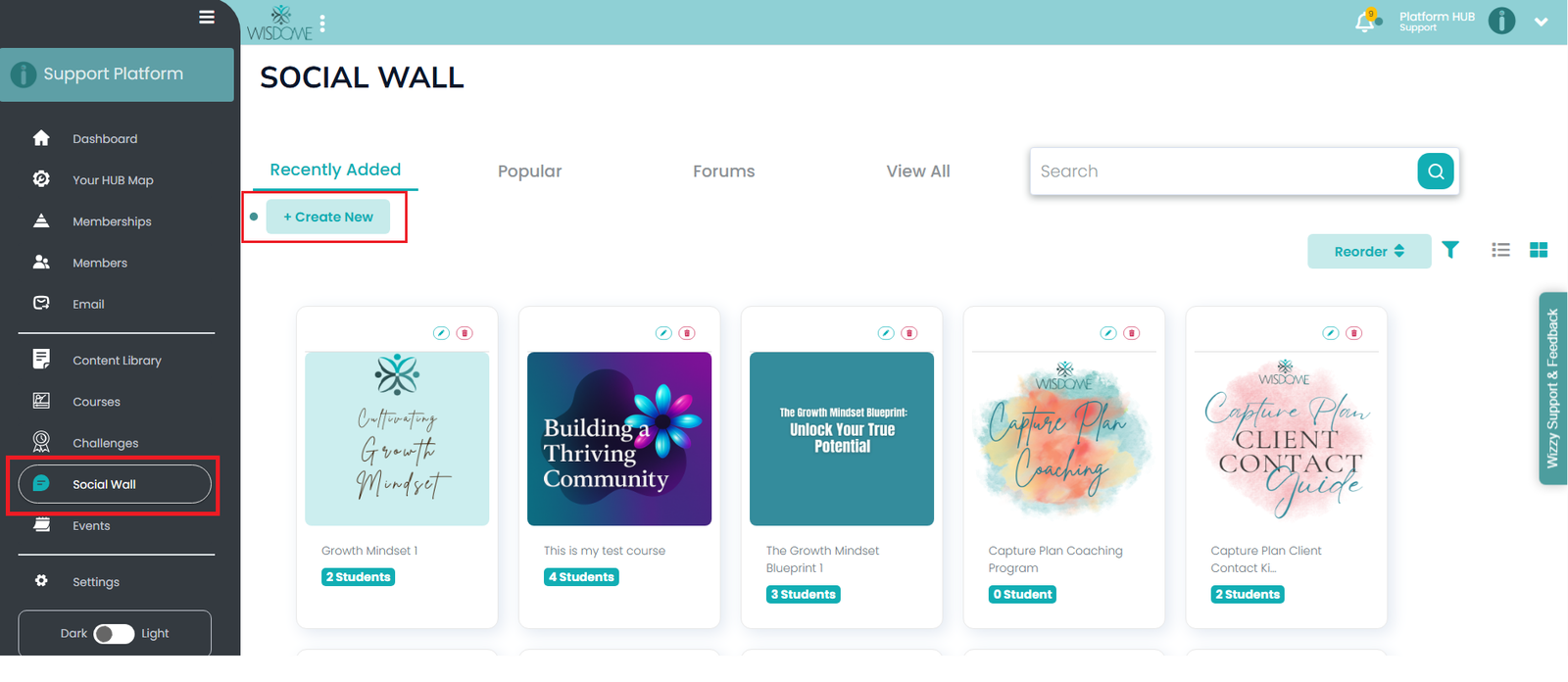
The key design decision is making community participation a structured step, not an optional one. Rather than ending a lesson with "feel free to share your thoughts," end it with "post your answer to this question in the [module name] group before moving to the next lesson." The community becomes part of the curriculum, not an add-on.
## Drip-Feed Content Paired With Community Milestones
One of the most effective structural changes you can make to a course is adding drip-feed content release — spreading lessons across days or weeks rather than making everything available at once.
This sounds counterintuitive. Shouldn't giving people everything upfront be more valuable? In practice, it removes the pacing that makes learning stick. When a course releases all content on day one, some members race through it without absorbing anything. Others open it, feel overwhelmed by the volume, and close it immediately. Neither outcome serves them.
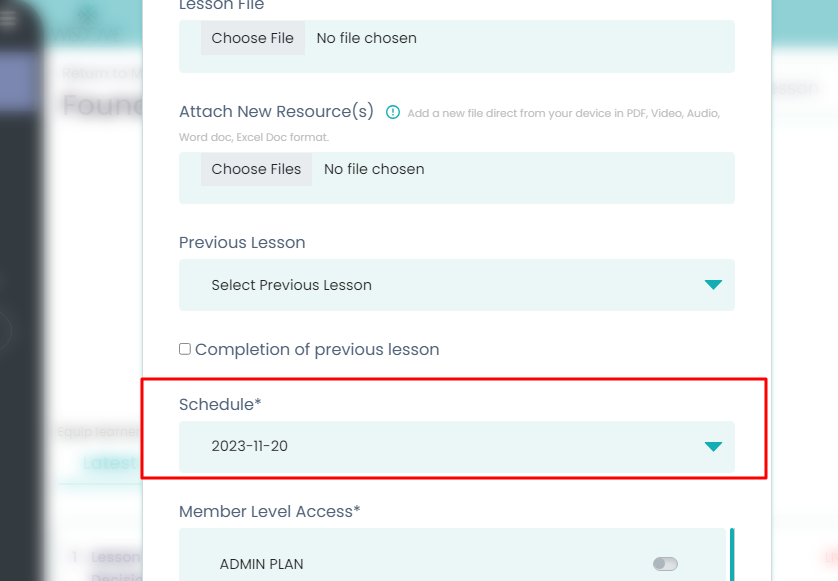
Wisdome's drip-feed feature lets you set specific release dates for each lesson. Pair this with your Social Wall groups and you create a natural cohort effect even in a self-paced course: members move through the same content at roughly the same pace, creating shared reference points in the community. The person who joined last week and the person who joined this week are both working through module two — and both have a reason to be in the same conversation.
## Challenges as a Completion Engine
Wisdome's Challenges feature was built specifically for structured, time-bound learning. A challenge takes the core framework of community-first design and applies it to a shorter format — typically five to thirty days — with daily or weekly activities, clear progress markers, and a defined finishing line.
Challenges consistently produce higher completion rates than open-ended course formats because they compress the timeframe, increase the frequency of interaction, and make "finishing" a near-term event rather than a distant aspiration. Members who might drift across twelve weeks of a self-paced course will often complete a thirty-day challenge without difficulty — because the design makes it difficult to quietly stop without noticing.
Using challenges as a gateway into your full course is one of the most effective launch and conversion strategies available. The challenge builds habit, demonstrates your expertise in a concentrated format, and creates the social momentum that carries naturally into a longer program.
## Automated Emails as a Re-Engagement System
Even with the best community-first design, some members will go quiet. Life intervenes. The key is having a system that notices and responds — without requiring you to personally monitor every account.
Wisdome's email automation lets you set trigger-based sequences that fire based on member behaviour. A member who completes a module receives an automated message pointing them to the community discussion for that section. A member who enrolls in a course receives a structured welcome sequence timed across their first week. A member nearing the end of a course gets a prompt to share their result with the community.
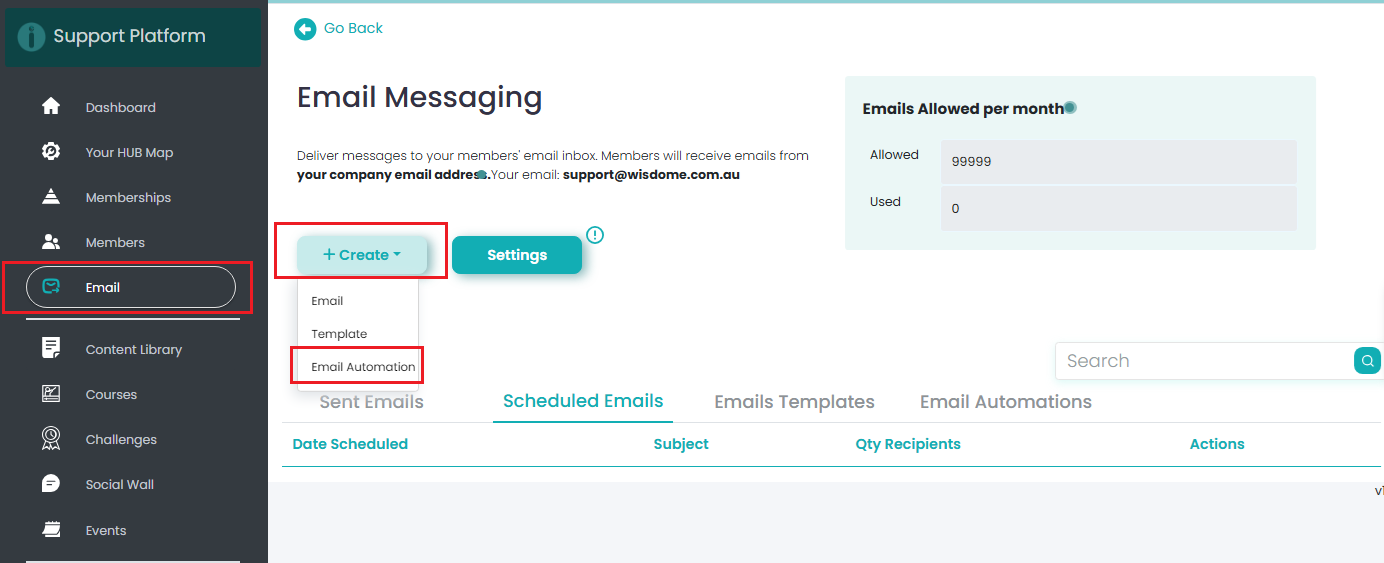
These automations don't replace human connection — they create the conditions for it. A timely, well-placed message that brings a member back to the community before they've mentally decided to stop is worth more than any amount of after-the-fact re-engagement.
## Designing for Completion From the Start
The single most important insight from community-first course design is this: completion is not something you hope for after the fact. It's something you design for from the beginning.
That means social touchpoints built into every module. It means drip-feed pacing that creates shared progress across your cohort. It means challenges that build momentum and habit before the main course begins. And it means automated systems that catch members before they drift.
When your course and your community live in the same place — when a member can finish a lesson and immediately land in a conversation with people who just completed the same thing — the gap between consuming content and genuinely engaging with it closes. That's where real completion happens. And that's what turns a course into a business that grows through the results it produces.
[▶ Subscribe to the Wisdome YouTube channel](https://www.youtube.com/@wisdome-courseplatform)
[🚀 Start building your IP — share your knowledge with those who deserve it](https://wisdome.com.au/pricing)